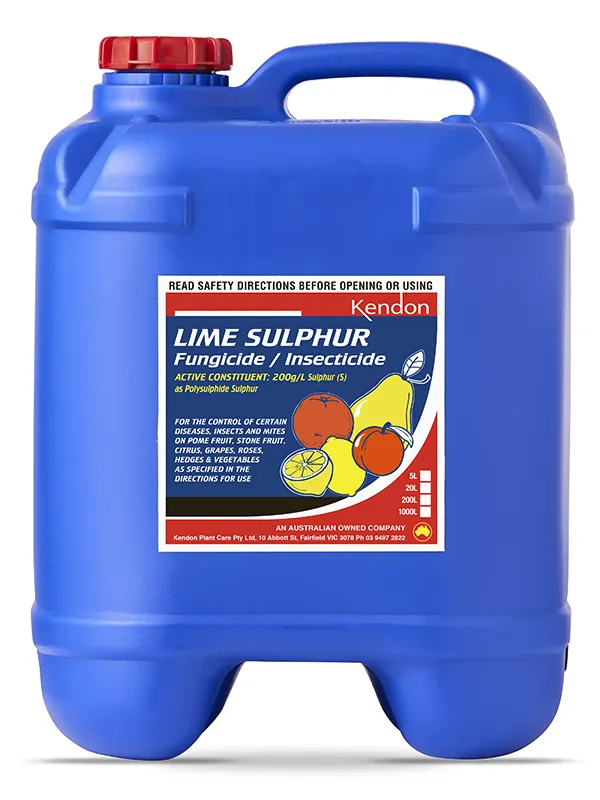
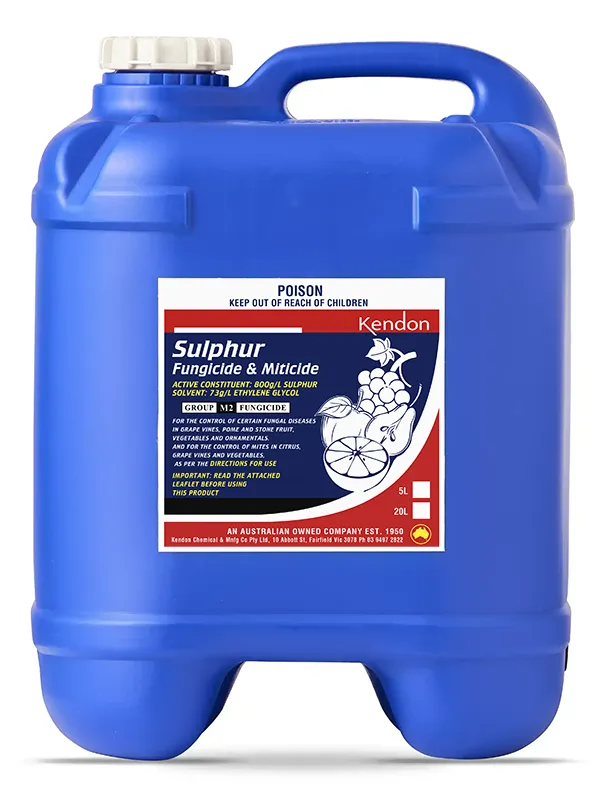
Sulphur Fungicide & Miticide
Non-systemic fungicide and miticide with protective activity by both contact and in the vapour phase. Effectively controls certain fungal diseases and mite attacks in grape vines, pome and stone fruit, vegetables and ornamentals.
| Sulphur Fungicide & Miticide | |
|---|---|
Target Pests
| |
Product Type |
Fungicide / Miticide |
Active Ingredient |
800g/L Sulphur |
Group |
M2 |
Pack Size |
1L, 5L, 20L |
APVMA Registration # |
57790
Search APVMA number at APVMA PubCRIS. |
Profile
Used as a pesticide since the early days. Works by preventing fungal spores from germinating and disrupting several key enzyme and metabolic processes within the fungus. It also produces a fungitoxic vapour, especially in warm conditions, which enhances coverage and stops powdery mildew growth on untreated surfaces.
Key Features & Benefits
- Provides reliable control of powdery mildew across a wide range of crops
- Enhances plant health by stopping early fungal infection
- Low resistance risk, supporting long-term disease management
- Vapour action improves coverage, protecting areas not directly sprayed
- Cost-effective and suitable for regular preventative use
- Fits well into integrated spray programs, reducing reliance on single-site fungicides
Toxicity
Acute oral Mammalian Toxicity (LD50, mg/kg) rats > 5000
Application Guide
| Crop | Pest / Disease | Rate mL/100L of water | Critical Comments |
|---|---|---|---|
| All rates below are given for dilute spraying. For concentrate spraying, refer to the Mixing / Application section. |
Apply by dilute or concentrate spraying equipment. Apply the same total amount of product by dilute or concentrate spraying methods. |
||
| Tree & Vine Crops | |||
| Citrus | Brown Citrus Rust Mite | 200–500 | Spray July–August with thorough coverage. Use the higher rate for heavy infestations. |
| Citrus Bud Mite Citrus Rust Mite |
400–500 | ||
| White Louse Scale | Either spray at petal fall with copper or spray sulphur alone during spring or autumn. Use the higher rate for heavy infestations. | ||
| Grapes | Grape Leaf Blister Mite Grape Leaf Rust Mite |
200–350 | Apply at 2–4 week intervals depending on the incidence of the pests. Use the higher rate for heavy infestations. |
| Powdery Mildew | Apply when shoots are 20–25cm long and repeat at intervals of 10–14 days during humid weather. Use the higher rate for heavy infestations. | ||
| Ornamentals | Two Spotted Mite Powdery Mildew |
200–300 | Apply when pest or disease is first seen and repeat as necessary. |
| Pome Fruit | Black Spot (Scab) Powdery Mildew |
200–350 | Apply at pink bud, petal fall and at intervals of 2–3 weeks. Some varieties are sulphur sensitive and care should be taken spraying these varieties. Never spray them when hot or at full dose rate. |
| Stone Fruit (except Apricots) |
Brown Rot | 200–350 | Apply at 4 weeks after petal fall and then as cover sprays. |
| Rust | Apply after petal fall and then at intervals. Use the higher rate when conditions favour disease. | ||
| Non Tree & Vine Crops | |||
| Vegetables (except Cucumbers & Rockmelons) |
Brown Spider Mite Powdery Mildew Rust Tomato Russet Mite Two Spotted Mite |
200–300 | Apply when pest or disease is first seen and repeat as necessary. Use the higher rate in crops with a large cover or when conditions favour disease or mite development. |
| Apply Kendon Sulphur Fungicide and Miticide by dilute or concentrate spraying equipment following the Application Guide above. Always download and read the current product label before use and follow all regulatory and safety instructions. | |||
What is Kendon Sulphur Fungicide and Miticide and what is it used for?
What is the active constituent in Kendon Sulphur Fungicide and Miticide?
How do I apply Kendon Sulphur Fungicide and Miticide and how much should I use?
Shake the container well before use. Place half the water in the spray tank, add the required amount of Kendon Sulphur Fungicide and Miticide whilst agitating, then add the remaining water to the correct level. Maintain agitation whilst travelling to work and throughout the spraying operation.
Application rates range from 200–500mL/100L of water depending on the crop, pest or disease, and infestation level — refer to the Application Guide above for the rate applicable to your crop and situation. The product can be applied by dilute or concentrate spraying equipment; all rates in the Application Guide are given for dilute spraying, and the same total amount of product must be applied whether using dilute or concentrate methods.
After spraying, empty all filters and spray lines of dilute spray and clean the sprayer tank thoroughly with clean water.
Always download and read the current product label before use. This product is not to be used for any purpose or in any manner contrary to the label unless authorised under appropriate legislation.
What is the withholding period (WHP) for Kendon Sulphur Fungicide and Miticide?
Can Kendon Sulphur Fungicide and Miticide be tank mixed with other products?
What crops and conditions should I avoid when using Kendon Sulphur Fungicide and Miticide?
Does Kendon Sulphur Fungicide and Miticide control powdery mildew on grapes?
Will Kendon Sulphur Fungicide and Miticide control black spot (scab) on apples and pears?
How should I store and dispose of Kendon Sulphur Fungicide and Miticide?
What should I do in case of poisoning, and where can I get the Safety Data Sheet (SDS) for Kendon Sulphur Fungicide and Miticide?
If poisoning occurs, contact a doctor or the Poisons Information Centre on 13 11 26. In a transport emergency, dial 000 (Police or Fire Brigade). For specialist advice in an emergency, call (03) 9497 2822.
Additional safety information is listed in the Safety Data Sheet (SDS), which can be requested by clicking the Request SDS button on this page.
Can fungicide resistance develop with Kendon Sulphur Fungicide and Miticide?
Where can I buy Kendon Sulphur Fungicide and Miticide?
BUY FROM
Our Distributors