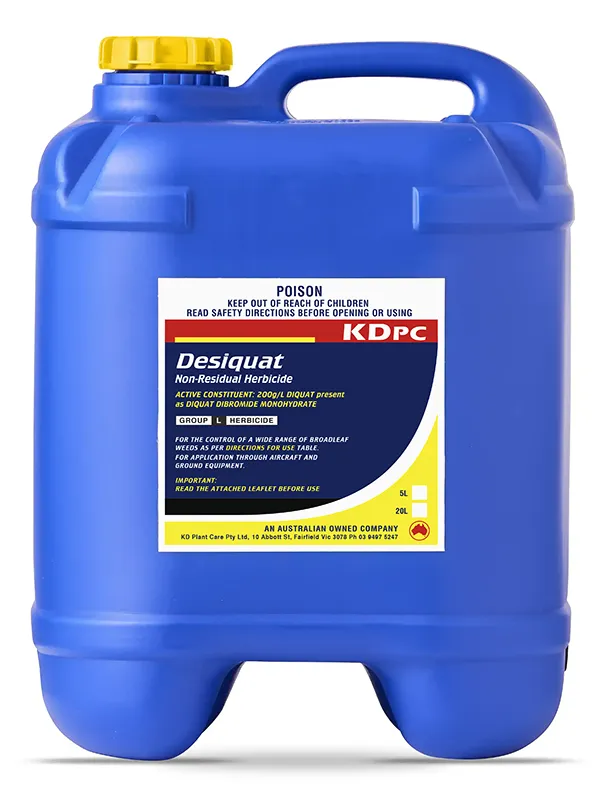
Fast-acting, non-selective contact herbicide, designed for quick desiccation of green plant tissue. Ideal for use in broadleaf and aquatic weed control, crop desiccation, and non-crop areas. It rapidly destroys cell membranes on contact, delivering effective weed control without residual soil activity.
Diquat interferes with photosystem I in the chloroplasts by diverting electrons, which leads to the production of reactive oxygen species (ROS)
These ROS cause rapid oxidative damage to plant cell membranes, resulting in cell collapse and tissue desiccation
Since Diquat is not systemically translocated, it only affects the parts of the plant it directly contacts, making thorough coverage essential for effective control
Key Features & Benefits
Fast-Acting Crop Desiccation: Diquat rapidly dries out green foliage and weeds within 3 to 4 days, allowing for faster, more efficient harvesting.
Improves Harvest Efficiency: It reduces pod shattering in canola and helps manage uneven ripening, allowing for direct heading instead of windrowing.
Reduces Grain Moisture: By drying the crop faster, it assists in lowering the moisture content of seeds, reducing drying costs and harvest delays.
Non-Residual Action: As a contact herbicide, it does not persist in the soil, which is beneficial for rotation cropping.
Broad-Spectrum Weed Control: Highly effective against broadleaf weeds, including wild radish and annual ryegrass.
Aquatic Weed Control: Registered for controlling aquatic weeds like water hyacinth, salvinia, and duckweed in water bodies.
Versatile Application: Used across various crops, including canola, pulses (lentils, chickpeas) and in pastures.