
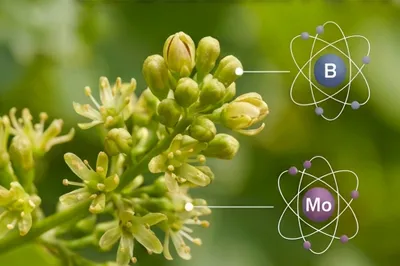
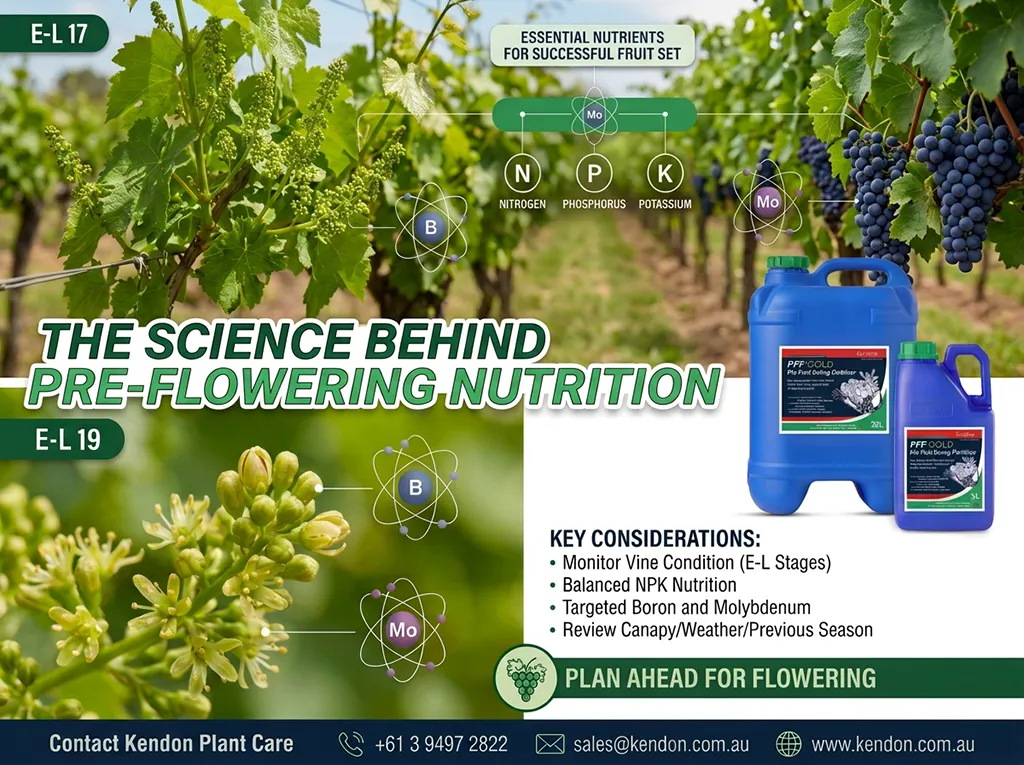
Healthy vines. Balanced nutrition. A well-planned start to the season.
The period leading up to flowering is an important stage in the grapevine growth cycle. During this time, flower clusters develop, shoots continue to grow and vines prepare for pollination, fertilisation and fruit set.
While successful fruit set depends on several factors, maintaining appropriate vine nutrition is an important part of a well-managed vineyard program. Understanding the role of essential nutrients and recognising the right growth stage can help growers make informed decisions before flowering begins.
1. Understand the pre-flowering window
The modified Eichhorn–Lorenz (E-L) system provides a practical way to identify grapevine growth stages and plan vineyard management activities.
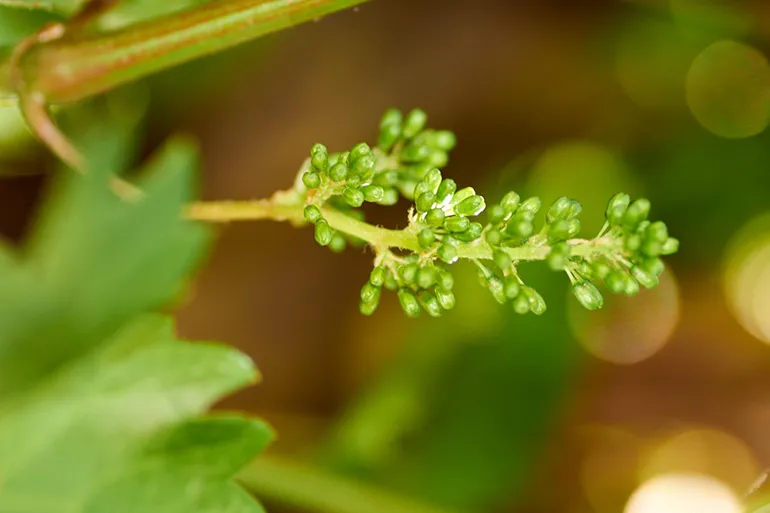
E – L 17 – Inflorescences fully developed
At this stage, the inflorescences are fully developed and individual flowers are separating. It is an important opportunity to assess vine condition, review nutrient status and prepare for the approaching flowering period.
E – L 19 – Beginning of flowering
Flowering begins as the first flower caps loosen and fall. Pollen germination, pollen tube growth and fertilisation follow, leading to fruit set and the development of young berries. Monitoring vine condition and planning nutrition before flowering can help growers identify potential nutrient limitations ahead of this important reproductive stage.

2. Which nutrients matter around flowering?
Different nutrients perform specific functions in grapevine growth and reproductive development. Maintaining adequate nutrient levels is important, but additional applications do not necessarily improve performance when vines are already adequately supplied.
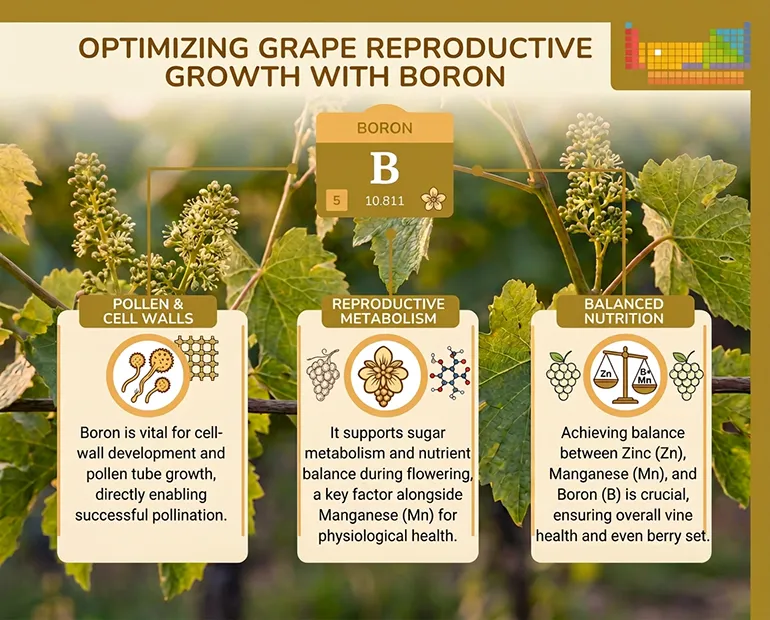
Boron (B) — Supporting pollen germination and pollen tube growth
Boron (B) plays a vital role in cell-wall development, sugar metabolism and pollen tube growth. In grapevines, boron deficiency can impair reproductive development, potentially leading to poor fruit set and irregular berry formation.
Boron works alongside manganese (Mn) in several physiological processes, supporting nutrient balance and reproductive development. Both nutrients contribute to successful flowering and pollination, while deficiencies may disrupt normal plant growth and physiological regulation.
However, the margin between boron deficiency and toxicity is relatively narrow. Assess vine nutrient status carefully before applying additional boron to ensure appropriate rates and avoid potential toxicity.
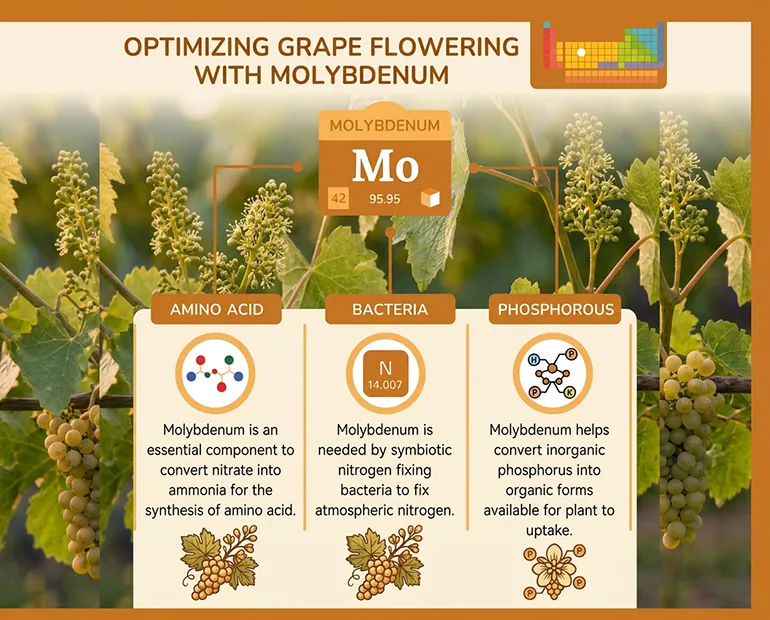
Molybdenum (Mo) — Supporting nitrogen metabolism
Molybdenum (Mo) plays an important role in nitrogen metabolism by supporting enzymes involved in nitrogen utilisation. During pre-flowering, adequate Mo nutrition may support normal reproductive development and help address nutrient limitations that can contribute to poor fruit set in grapevines.
Research has investigated pre-flowering Mo applications for their potential to improve fruit set, particularly where Mo availability is limiting. However, the benefits depend on the vine’s existing nutritional status. Applications should be guided by appropriate agronomic advice and an assessment of vine nutrient requirements.
Nitrogen, Phosphorus and Potassium — Maintaining balanced vine nutrition
These primary nutrients support different aspects of plant function:
- Nitrogen (N): Supports chlorophyll production, protein synthesis and shoot development.
- Phosphorus (P): Participates in energy transfer and essential metabolic processes.
- Potassium (K): Supports enzyme activity, water regulation and carbohydrate transport.
Balanced nutrition is essential during spring growth to support healthy vine development and reproductive performance. However, excessive nitrogen (N) can promote vigorous vegetative growth, increasing competition between shoots and developing reproductive structures. Similarly, excessive potassium (K) application may interfere with calcium (Ca) uptake, potentially contributing to calcium deficiency. Avoid excessive potassium applications during early spring and maintain a balanced nutrient supply through the cell division stage, taking into account vine nutrient status and crop requirements.
3. What can affect fruit set beyond nutrition?
Fruit set is influenced by the interaction between vine physiology, environmental conditions and vineyard management. Fertiliser applications alone cannot overcome every factor affecting reproductive performance.
- Weather during flowering
Unfavourable temperatures, rainfall and other weather conditions can interfere with flower-cap shedding, pollen germination and fertilisation. - Vine vigour and carbohydrate availability
Excessive vegetative growth can increase competition for available carbohydrates and nutrients. Maintaining an appropriate balance between shoot growth and reproductive development is an important management consideration. - Water availability
Both water stress and poorly managed vine growth can affect normal physiological processes. Monitoring vineyard moisture conditions helps growers make informed irrigation decisions. - Previous-season nutrition
Vines rely partly on nutrients and carbohydrate reserves accumulated in their permanent structures. Nutritional limitations during the previous season may influence early growth and subsequent reproductive development.
4. Kendon PFF Gold: Targeted Nutrition for the Pre-Flowering Window
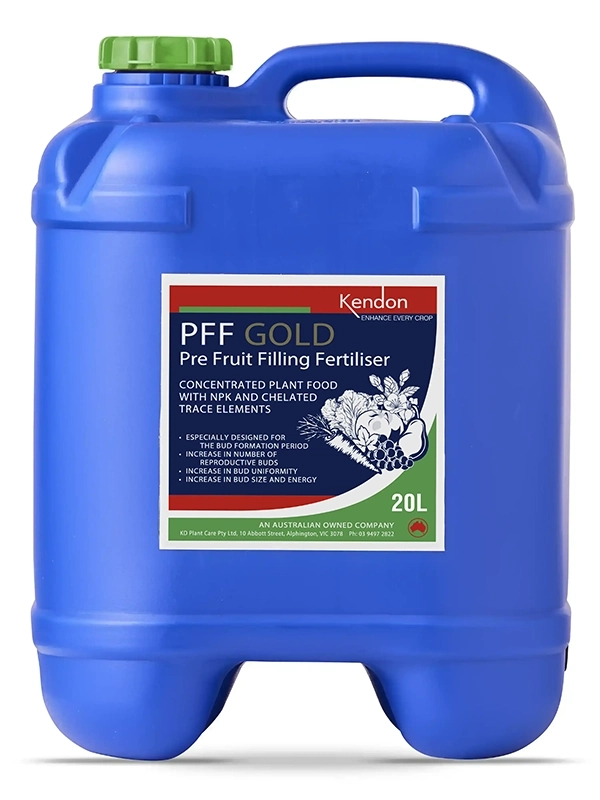
Kendon PFF Gold is a liquid foliar fertiliser formulated with an NPK analysis of 5-3-5, together with EDTA and trace elements including boron (B) and molybdenum (Mo).
Its formulation provides a practical option to consider within a planned grapevine nutrition program, particularly when reviewing nutrient requirements around bud initiation, flowering, pollination and early cell division.
Why consider Kendon PFF Gold before flowering?
- Balanced NPK formulation
Provides nitrogen, phosphorus and potassium to complement the wider vineyard nutrition program. - Boron and molybdenum included
Contains two micronutrients involved in important plant physiological processes, including pollen tube development and nitrogen metabolism. - Liquid foliar formulation
Offers a convenient and most effective foliar application option when used according to label directions and appropriate vineyard management practices. - A stage-based nutrition approach
Kendon PFF Gold can be considered during relevant early growth stages, with the overall program adjusted to suit vine condition, nutrient status and the vineyard’s requirements.
From early development to fruit filling
Grapevine nutrient requirements change throughout the growing season. Kendon PFF Gold (Stage 1) and Kendon High K (Stage 2) can be considered within a staged nutrition strategy, based on the nutrient composition of the of the products.
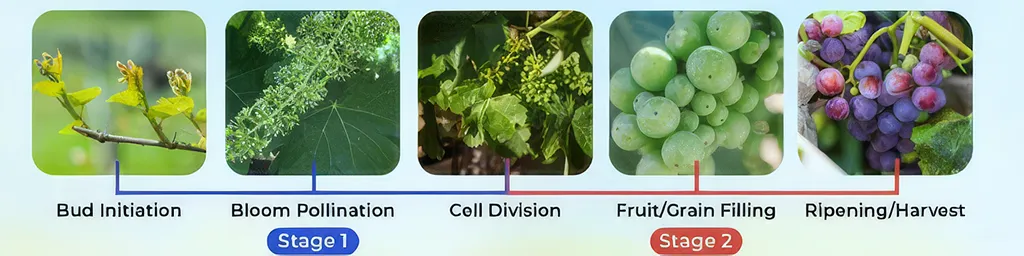
The timing and suitability of any application should be guided by the product label, vineyard conditions and, where appropriate, plant tissue analysis.
PLAN AHEAD FOR FLOWERING
Pre-flowering is an important opportunity to review vine health and make informed nutrition decisions before the reproductive stages progress.
PFF Gold by Kendon Plant Care – Balanced NPK nutrition with boron and molybdenum for consideration in your grapevine nutrition program.
Have questions, need more details or want to place an order? Reach out to us on our contact form or (03) 9497 2822 — we’re always happy to help.