
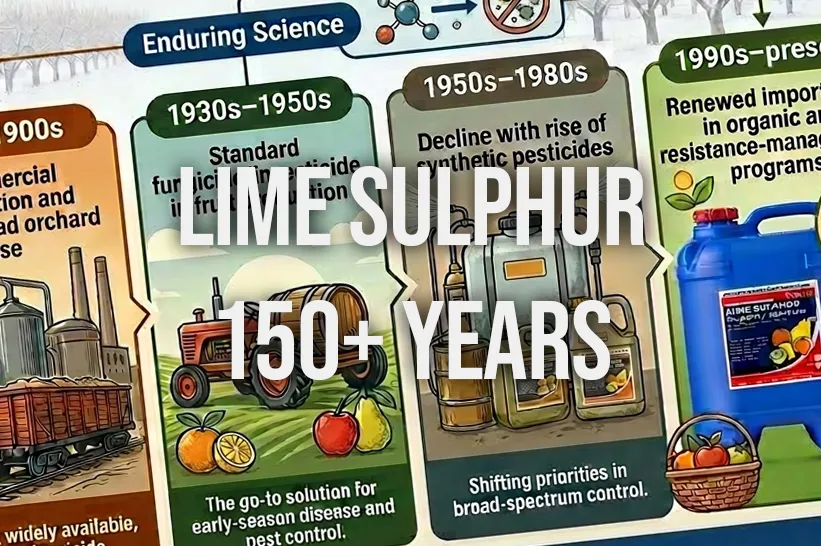
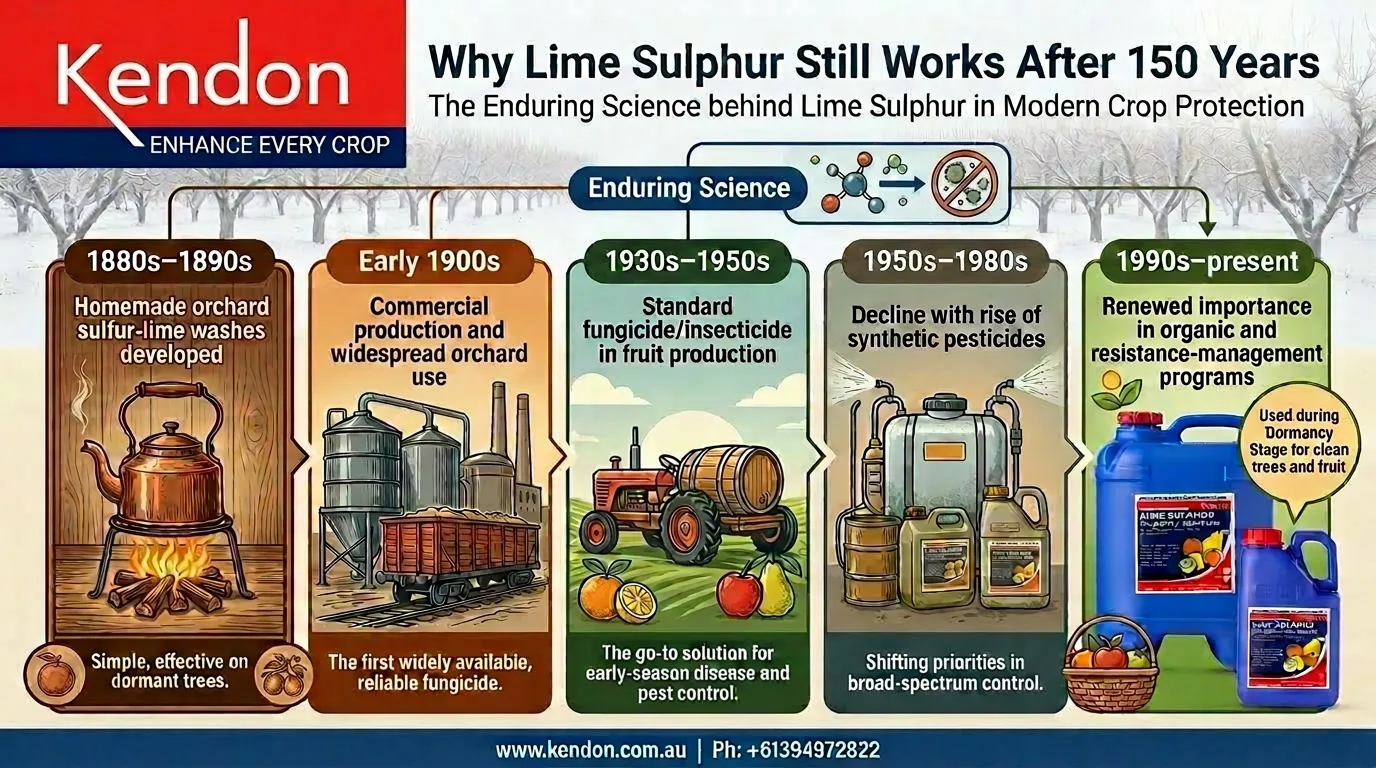
In an agricultural industry increasingly challenged by fungicide resistance, environmental pressure, and the demand for sustainable production systems, one of the oldest crop protection tools continues to demonstrate remarkable relevance is Lime Sulphur.
Originally developed in the late 1800s, Lime sulphur has remained a trusted solution in orchards, vineyards, and horticultural systems worldwide. While many modern fungicides rely on highly targeted single-site chemistry, Lime sulphur operates through a broad-spectrum, multi-site mode of action that continues to provide reliable disease suppression more than 150 years later.
Today, modern science helps explain why.
Understanding the Chemistry of Lime Sulphur
Lime sulphur is primarily composed of calcium polysulphides, produced by reacting sulphur with calcium hydroxide under heat. The resulting solution contains active sulphur compounds capable of disrupting several essential biological functions within fungal pathogens and mite populations.
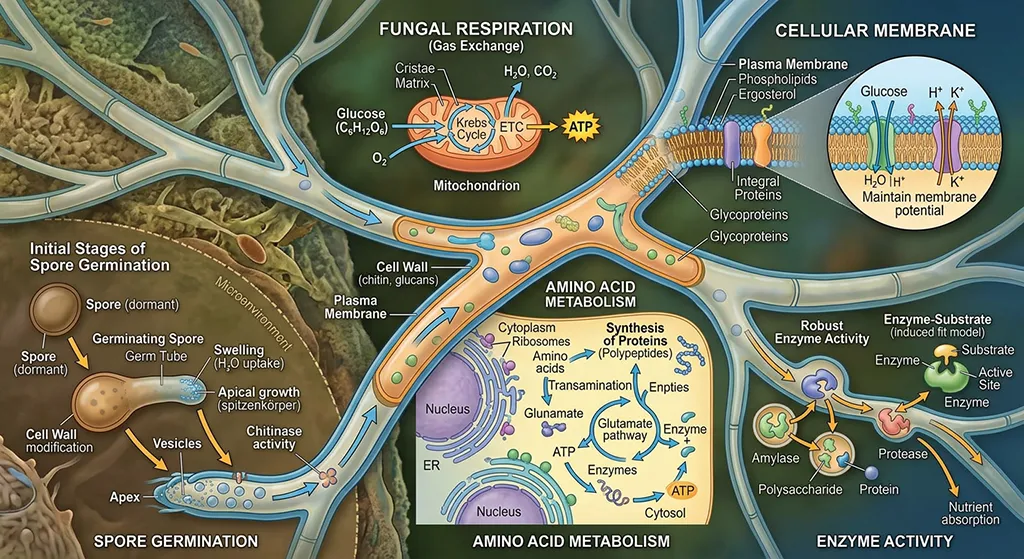
Unlike systemic fungicides that target a single biochemical pathway, lime sulphur affects multiple metabolic systems simultaneously. This includes interference with:
- Fungal respiration
- Enzyme activity
- Cellular membrane integrity
- Amino acid metabolism
- Spore germination processes
Because pathogens are attacked at several biochemical points at once, the likelihood of resistance development is significantly reduced.
This is one of the major reasons Lime sulphur chemistry remains effective generation after generation.
The Hidden Importance of Dormant Season Applications
One of the most scientifically important uses of lime sulphur occurs during dormancy.
Many fungal pathogens survive winter in bark crevices, bud scales, pruning wounds, and fallen plant material. During this period, pathogens remain inactive but viable, forming a reservoir of inoculum ready to infect new growth in spring.
Dormant applications of lime sulphur help reduce this overwintering inoculum before seasonal disease cycles begin.
Research has shown that lowering early-season pathogen pressure can significantly reduce/ eradicate:
- primary infection events
- disease establishment
- overall epidemic intensity later in the season
In practical terms, dormant spraying acts as a preventative biological reset — suppressing fungal populations before favourable environmental conditions trigger rapid disease development.

Lime Sulphur in Sustainable Agriculture
As global agriculture moves toward more sustainable production systems, lime sulphur continues to maintain relevance due to its compatibility with integrated and organic farming approaches.
Its value lies not only in disease suppression, but also in its role within broader crop protection systems focused on:
- Resistance management
- Preventative disease control
- Reduced synthetic fungicide reliance
- Integrated horticultural practices
In many crops, lime sulphur remains an effective tool for managing:
- Powdery mildew
- Black spot
- Scale insects
- Mites
- Overwintering fungal spores
This combination of historical reliability and scientifically validated functionality continues to support its use across modern production systems.
An Old Chemistry with Modern Relevance
Despite rapid advances in agricultural chemistry, Lime sulphur remains scientifically relevant because it addresses one of the industry’s greatest long-term challenges: sustainable disease management. Its broad-spectrum activity, low resistance risk, dormant season effectiveness, and compatibility with integrated farming systems continue to make sulphur chemistry a valuable component of modern horticulture.
More than 150 years after its introduction, Lime sulphur remains a powerful reminder that enduring agricultural technologies are often grounded in strong biological science and proven field performance.
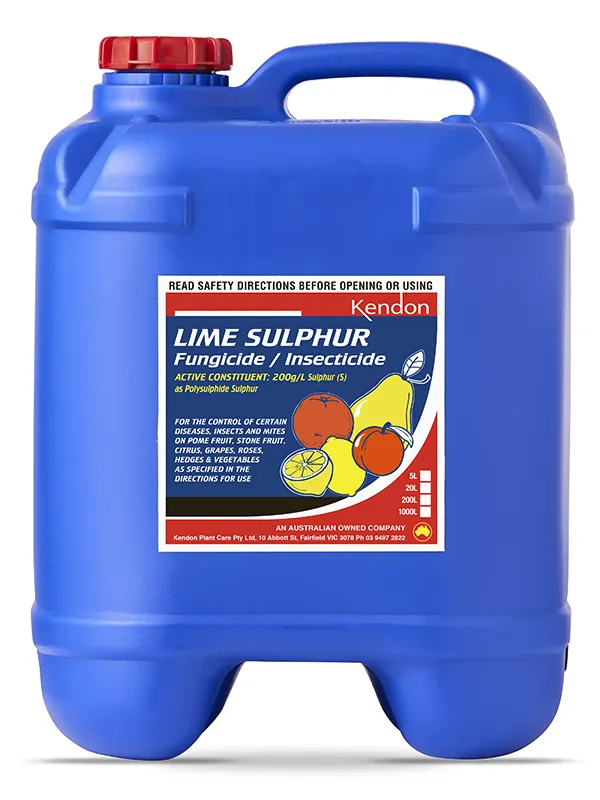
Today, Kendon continues this tradition by providing a high-quality Lime Sulphur trusted by generations of growers across the horticultural industry for both large and small-scale applications. Known for its consistent reliability and dependable performance, Kendon Lime Sulphur remains a preferred choice for orchards, vineyards, nurseries, and home gardens alike.
Ask your trusted supplier for Kendon Lime Sulphur — available in 500mL, 5L, 20L, 200L, and 1000L pack sizes.