Pyrethrum Insecticide
Natural Pest Control
Looking for a natural and fast-acting solution to protect your garden and crops? Our Pyrethrum-based products are a broad spectrum insecticide. They offer safe, effective, garden and crop, pest control of a broad range of insects, including caterpillars, aphids, leaf hoppers, thrips, and ants.
Kendon’s pyrethrum products are solvent-free and well-known for their quality and effectiveness.
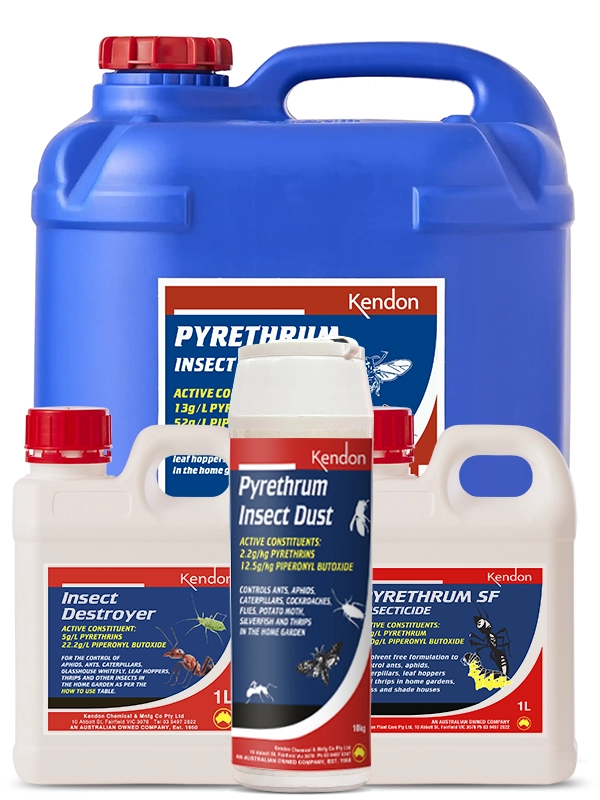
Pyrethrum SF Insecticide is a high-strength formulation ideal for commercial or large-scale applications.
Pyrethrum Insect Killer offers a balanced formula suitable for both commercial and home use.
Insect Destroyer is designed for home gardeners, with convenient pack sizes and easy mixing for immediate use.
Pyrethrum Insect Dust comes in ready to use form and can be applied directly to the surfaces or infected plants.
All four products utilise natural pyrethrins as the active ingredient, with varying concentrations and application rates.
| Pyrethrum SF Insecticide | Pyrethrum Insect Killer | Insect Destroyer | Pyrethrum Insect Dust | |
|---|---|---|---|---|
Application |
Commercial Pyrethrin Insecticide | Commercial / Domestic | Home Gardener | Domestic / Home Gardener |
Product Type |
Insecticide | |||
Active Ingredient |
75g/L Pyrethrin + 300g/L Piperonyl Butoxide | 13g/L Pyrethrins + 52g/L Piperonyl Butoxide | 5g/L Pyrethrins + 22.2g/L Piperonyl Butoxide | 2.2g/kg Pyrethrins + 12.5g/kg Piperonyl Butoxide |
Group / Class |
Pyrethrins Class | |||
Pack Sizes |
250ml, 1L, 5L, 20L | 100ml, 500ml, 1L, 5L, 20L | 250ml, 500ml, 1L | 300g Shaker Pack, 1kg, 10kg, 25kg |
Acute Oral Toxicity (LD₅₀) |
273–2370 mg/kg in rats (moderate to low toxicity) | |||
Pest Infestation / Coverage / Mix Volume |
Large | Medium / Large | Small | Small |
Price |
$$ | $$ | $ | $ |
APVMA Registration # |
32688 | 32687 | 55748 | 33212 |
| Search APVMA numbers at APVMA PubCRIS. | ||||
How Our Pyrethrum Insecticides Work
Kendon Pyrethrum-based solutions (also known as pyrethrin insecticide) are a natural, fast-acting and effective way to control pests. Derived from the dried flowers of Tanacetum cinerariifolium (pyrethrum daisies), these formulas work by disrupting the nerve function of insects by modulating the voltage – gated sodium channels, preventing the channels from closing and resulting in hyperexcitation which allows rapid paralysis and death within minutes of contact. They contain six active compounds—pyrethrins and related esters—which make it difficult for pests to develop resistance.
Request for SDS please
Key Features & Benefits
- Broad-spectrum: Effective against a wide range of pests, including flies, mosquitoes, cockroaches, aphids, and caterpillars.
- Rapid knockdown: Causes insects to fall over very quickly after contact.
- Natural origin: Derived from the chrysanthemum flower, making it a botanical insecticide.
- Repellent/exciter: Can also act as a repellent and causes insects to move more, which increases their exposure to the insecticide.
How should I mix and apply Kendon Pyrethrum?
| Pyrethrum SF Insecticide | |||
|---|---|---|---|
| Plants | Pests | Rate | How to Apply |
| Vegetables, Ornamentals | Ants, Aphids, Caterpillars, Leaf Hoppers, Thrips | Mix 1ml / 1L Water | Apply with a fine mist spray when infestation occurs. Pests must be contacted with spray. |
| Ferns, Indoor Plants | Mix 3ml / 1L Water | ||
| Pyrethrum Insect Killer | |||
|---|---|---|---|
| Plants | Pests | Rate | How to Apply |
| Vegetables, Ornamentals | Ants, Aphids, Caterpillars, Leaf Hoppers, Thrips | Mix 30ml / 5L Water | Apply with a fine mist spray when infestation occurs. Pests must be contacted with spray. |
| Insect Destroyer | |||
|---|---|---|---|
| Plants | Pests | Rate | How to Apply |
| Flowers, Fruit Trees & Roses | Ants, Aphids, Caterpillars, Glasshouse Whitefly, Leaf Hoppers, Thrips | 20ml / 1L Water | Thoroughly spray all foliage including the under surfaces of leaves when insects first appear, then at 7 day intervals |
| Vegetables | |||
| Indoor & Outdoor Plants | |||
| Outdoors | Ants, Cockroaches & Houseflies | ||
| Pyrethrum Insect Dust | ||
|---|---|---|
| Plants / Areas | Pests | How to Apply |
| Vegetables, Ornamentals, Shrubs | Aphids, Caterpillars, Thrips | Apply when infestation occurs. Re-apply every 5-7 days if required and insects persist. |
| Domestic | Ants, Cockroaches, Silverfish | Dust interior surface of cupboards, drawers and pantry, where pests are seen. |
| Stored Potatoes | Potato Moth | Apply 120g per bag of potatoes. |
| Dust Bins, Compost Heaps | Flies | Apply weekly where flies breed. Apply directly onto pests. |
Is pyrethrin safe for use on edible crops and in home gardens?
What pests can I control with Kendon’s pyrethrin-based insecticides?
When and how often should I apply these solutions during the growing season?
Can I mix these formulas with other garden products?
What is the withholding period after application on vegetables?
Why choose a natural insecticide over synthetic options?
What safety precautions and storage guidelines should I follow?
Where can I buy Kendon Pyrethrum Insecticides?
BUY FROM
Our Distributors